Wednesday, December 28, 2011

Color Seduction


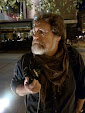
Bernice Abbot once said about photography that color gets in the way. The longer I work in photography the truer that statement becomes for me.

I'm periodically seduced by color, but more often than not color gets in the way of my seeing. I'm distracted by color and I miss the essence of a scene. The only color photography I make that I feel are successful are those in which color itself is the subject.

My natural tendency is to see through the color to find the substance of a thing. To me values of gray are more apparent than hues of color.

Photo: ©2011 David W Sumner

Saturday, December 10, 2011

Define the Space


There's a single light source, the sun, no artificial ambient light in the image. The drama of the image is formed by the lines of the structure against a dark sky as it is illuminated by the sun. Sunrise or sunset is irrelevant. It's the simplicity of elements and a single light source working together to isolate the dominate forms that define the space.

Photo: ©2011 David W. Sumner

Thursday, December 8, 2011

The Beauty of a Simple Thing


Practice looking to increase your ability to see.


Be aware that details can tell a story often overlooked.

Photos: ©2011 David W. Sumner

Tuesday, November 29, 2011

Master Simplicity


Find the simplicity in what you do, in the way you work. Don't complicate things with what you don't know.

Experiment and learn new techniques, but look for the simplicity in each new thing.

Master the simplicity of a thing and its complexities can more easily be understood.

Photo: ©2011 David W. Sumner

Thursday, November 10, 2011

Trying to Achieve a Zen Like State


"…mastery of a skill is followed by a sort of amnesia, resulting in a practice that is intuitive, even involuntary." - Corey Keller

Photo: ©2011 David W. Sumner

Sunday, October 30, 2011

Sometimes it Takes a Dog Story


Sometimes it's really difficult to tell a story in pictures. The story is there, but if the scene, the visual side of things, just doesn't convey the message, what do you do?

Sometimes you look for the "dog story." Everybody can relate to the image of a dog. No matter what the situation, include a dog in the scene and you transcend all language and a message, what ever it may be, gets through.

In the 1992 film, "The Public Eye," Joe Pesci's character, Leon Bernstein (loosely based on photographer Arthur Fellig , better known as Weegee) is about to photograph the corpse of gangster and tells one of the attending cops, "Put the hat in there. His hat, stick it in there! People like to see the dead guy's hat."

It makes sense.

Photo: ©2011 David W. Sumner

Wednesday, October 26, 2011

Contrasts

The other day while shooting downtown during lunch hour I noticed a considerable variety of behavior among all the office workers taking advantage of the warm, sunny weather during their noon break.

Many congregated in popular places to talk and socialize over a brown bag lunch.


Others sought quiet solitude to make phone calls.


Still others chose to stroll along the sidewalks with their partner or close friends.


These varied situations, all in the context of the lunch hour, brings a certain element of contrast to the photographing of this common phenomena. It's a contrast of subject and intent as opposed to a contrast of highlight and shadow. It becomes an important aspect in the telling of the story and helps shape the photographic narrative.


Photos: ©2011 David W. Sumner